Fuente: http://www.ecoasis.es/?p=1736#more-1736
DIETS FOR CHILDREN
Dietary habits are established in early childhood. Vegetarian diets offer your child the opportunity to learn to enjoy a wide variety of wonderful and nutritious foods.
Dietary habits are established in early childhood. Vegetarian diets offer your child the opportunity to learn to enjoy a wide variety of wonderful and nutritious foods. These foods provide excellent nutrition at all stages of childhood, from birth through adolescence.
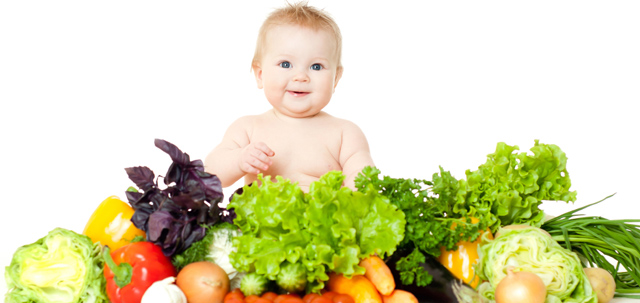
BEBÉS
The best food for newborns is breast milk, and the longer the baby is breastfed, the better. If your baby isn't being breastfed, infant formula is a good alternative and is widely available. Do not use commercial soy milk. Babies have special needs and require a soy-based formula specifically developed to meet those needs.
Babies don't need any food other than breast milk or soy formula during the first few months of life. Breastfed babies need about two hours of sun exposure per week to produce vitamin D. Some babies, especially those living in cloudy climates, may not produce enough vitamin D. In such cases, vitamin D supplements may be necessary.
Vegetarian women who are breastfeeding should also ensure they include good sources of vitamin B12 in their diet, as its intake can influence the levels that reach breast milk. Foods fortified with cyanocobalamin, the active form of vitamin B12, can provide adequate amounts of this nutrient. You can also take a multivitamin complex as directed by your doctor.
Breast milk or infant formula should be used for at least the first year of the baby's life.
Around four or five months of age, or when the baby's weight has doubled, other foods can be added to their diet.
Introduce one new food at a time, at intervals of one to two weeks. The following guidelines provide a flexible plan for introducing foods into your baby's diet.
Four to Five Months
Introduce cereales infantiles enriquecidos con hierro. Prueba primero con la papilla de arroz puesto que es el cereal que menos alergias provoca. Mézclala con un poco de leche materna o de fórmula de soja. Posteriormente ofrécele al bebé papillas de avena o cebada.
Six to Eight Months
Introduce vegetables. They should be well-cooked and mashed. Potatoes, green beans, carrots, and peas are good starting choices. Introduce fruits next. Try mashed banana, avocado, peach, or applesauce. By eight months of age, most babies can eat crackers, bread, and puffed cereals. Also, around eight months, babies can start eating higher-protein foods such as tofu or well-cooked, mashed kidney beans.
Children
Children have high calorie and nutrient needs, but their stomachs are small. Offer your child frequent snacks and include some less bulky foods in their diet, such as refined cereals and fruit juices. However, limit juices, as children can become bloated from drinking them, preferring their sweet taste to other foods.
Some foods, such as certain potato chips, peanuts, and grapes, can pose a choking risk. Be sure to cut food into small pieces and encourage your child to chew thoroughly before swallowing.
Calorie needs vary from child to child. The following guidelines are general. Food Groups for Children
* Breads and cereals: Includes all breads, rolls, cakes, hot and cold cereals, pasta, cooked grains such as rice and barley, and crackers. * Legumes, nuts, and seeds: Includes any cooked legumes such as kidney beans, other bean varieties, lentils, split peas, adzuki beans, green beans, and chickpeas; tofu, tempeh, meat substitutes, textured vegetable protein (TVP); all nuts and nut butters, seeds, and tahini (sesame butter). * Fortified soy milk: Includes all fortified soy milks and infant formula or breast milk for infants. * Vegetables: Includes all raw or cooked vegetables that can be purchased fresh, canned, or frozen. Also includes vegetable juices. * Fruits: Includes all fruits and 100% fruit juices. The fruit can be purchased fresh or canned, preferably in light or natural syrup, or in water.
RECOMMENDED SERVINGS
From 1 to 4 years of age
- Breads and cereals: 6 or more servings; one serving equals ½ to 1 slice of bread; ¼ to ½ cup of cooked cereal or pasta; ½ to 1 cup of breakfast cereal
- Legumes, nuts, and seeds: 2 or more servings; one serving equals ¼ to ½ cup of cooked beans, tofu, tempeh, or TVP; 40 to 80 grams of meat substitute; 1 to 2 tablespoons of nuts, seeds, or nut butters
- Fortified soy milk: 3 servings; one serving is equivalent to 1 cup of fortified soy milk, infant formula, or breast milk
- Vegetables: 2 or more servings; one serving is equivalent to between 1/4 and 1/2 cup of cooked vegetables or between 1/2 and 1 cup of raw vegetables
- Fruits: 3 or more servings; one serving is equivalent to between 1/4 and 1/2 cup of canned fruit; 1/2 cup of juice; 1 medium fruit
- Fats: 3 servings; one serving is equivalent to 1 teaspoon of margarine or oil
From 4 to 6 years of age
- Breads and cereals: 6 or more servings; one serving equals 1 slice of bread; 1/2 cup of cooked cereal or pasta; 3/4 to 1 cup of breakfast cereal
- Legumes, nuts, and seeds: 1½ to 3 servings; one serving equals ½ cup of cooked beans, tofu, tempeh, or TVP; 80 grams of meat substitute; 2 tablespoons of nuts, seeds, or nut butters
- Fortified soy milk: 3 servings; one serving equals 1 cup of fortified soy milk
- Vegetables: 1 to 1 1/2 servings; one serving equals 1/2 cup of cooked vegetables or 1 cup of raw vegetables
- Fruits: 2 to 4 servings; one serving is equivalent to ½ cup of canned fruit; ¾ cup of juice; 1 medium fruit
- Fats: 4 servings; one serving is equivalent to 1 teaspoon of margarine or oil
From 7 to 12 years of age
- Breads and cereals: 7 or more servings; one serving equals 1 slice of bread; 1/2 cup of cooked cereal or pasta; 3/4 to 1 cup of breakfast cereal
- Legumes, nuts, and seeds: 3 or more servings; one serving equals ½ cup of cooked beans, tofu, tempeh, or TVP; 80 grams of meat substitute; 2 tablespoons of nuts, seeds, or nut butters
- Vegetables: 4 or more servings; one serving equals ½ cup of cooked vegetables or 1 cup of raw vegetables
- Fruits: 4 or more servings; one serving equals ½ cup of canned fruit; ¾ cup of juice; 1 medium fruit
- Fats: 5 servings; one serving is equivalent to 1 teaspoon of margarine or oil
Note: Serving sizes may vary depending on the child's age.
To add more calories to your diet, include more servings of nut butters, dried fruit, soy products, and other high-calorie foods.
Make sure you regularly include a reliable source of vitamin B12 in your diet. Good sources include Vegetarian Support Formula nutritional yeast, vitamin B12-fortified foods such as soy milk, breakfast cereals, or meat substitutes, and vitamin B12 supplements.
If children do not get frequent sun exposure (exposing their hands and face to the summer sun for 20 to 30 minutes two or three times a week), which promotes vitamin D synthesis, there are fortified foods and supplements available.
Adapted from Simply Vegan, 3rd ed., 1999, pgs. 194-1 The Vegetarian Resource Group, PO Box 1463, Baltimore, MD 21203; 410-366-8343.
Example Menus
From 1 to 4 years of age
* Breakfast: Flakes with soy milk, orange juice * Lunch: Hummus (chickpea dip with sesame seeds) on crackers, banana, soy milk, pumpkin * Dinner: Lentil and tomato bread, mashed potatoes, creamed cabbage, soy milk * Snacks: Prunes, soy milk
From 4 to 6 years of age
* Breakfast: Oatmeal with apple and cinnamon, soy milk, orange segments * Lunch: Tofu salad on bread, apple juice, carrot sticks, oatmeal cookie * Dinner: Beans with molasses, roasted potatoes, spinach, pineapple chunks, soy milk * Snacks: Cereal and seed energy bars, cookies, soy milk
From 7 to 12 years of age
* Breakfast: Bran with raisins, soy milk, and sliced banana; toast with almond butter; orange juice. * Lunch: Macaroni with blended tofu and nutritional yeast; fruit salad; bread; green beans with almonds. * Dinner: Lentil soup; salad with vegetables and broccoli; bread; steamed carrots. * Snacks: Popcorn; cereal and seed energy bars; dried figs.