Today marks one month since dozens of people, diverse in background, education, beliefs, and age, gathered in front of the Veterinary Faculty of the Complutense University of Madrid to demand all the information, withheld until now, about the animals kept there. Information to which we have a right as citizens.

However, it is not the experiences of people outside of Veterinary studies that matter in this article, and therefore, we want to convey the feelings of some students of this faculty, often silenced in their own classrooms and even in their own circles.
A former student tells us what it was like to be accepted into her dream program:
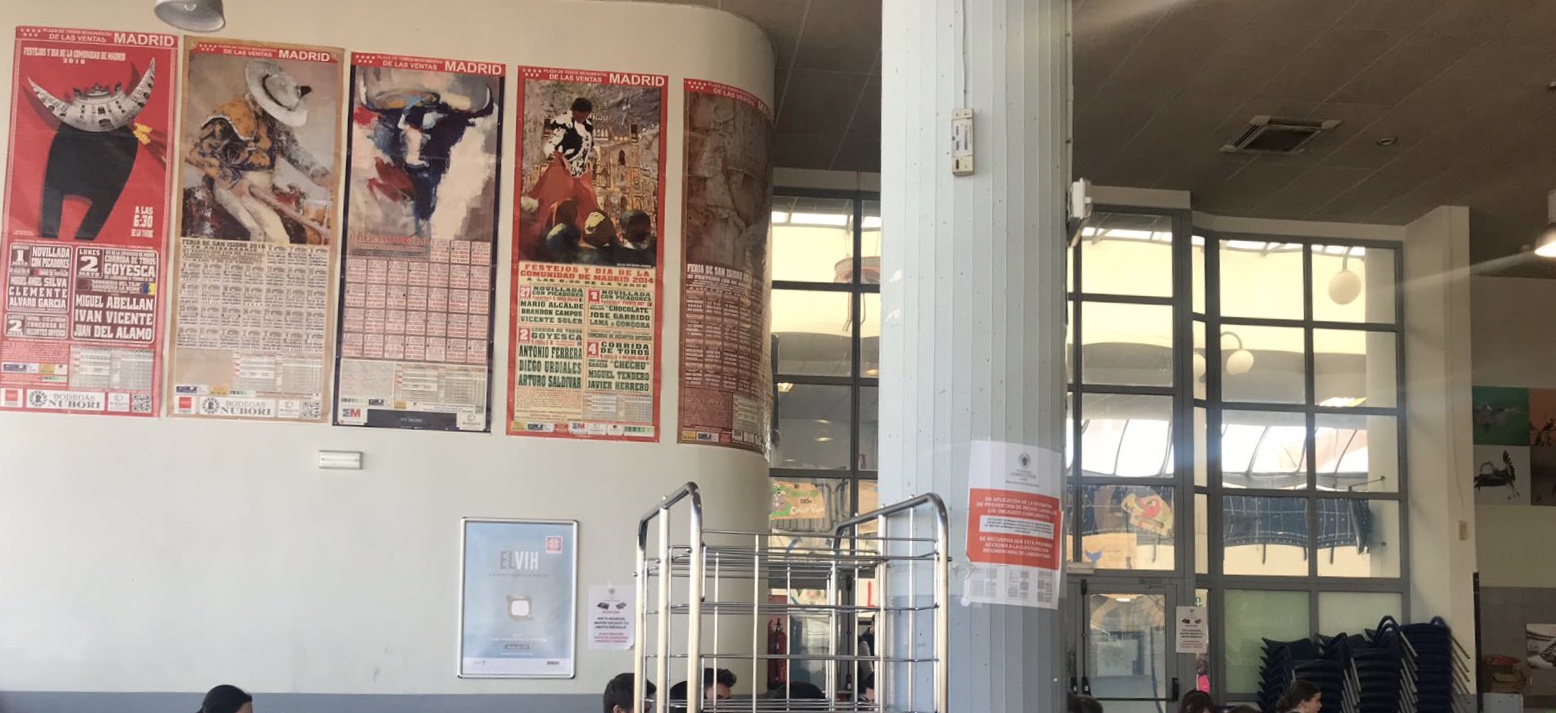
"On the first day, after the Dean's talk, in which they said that Veterinary Medicine was one big family, we went to the cafeteria and… first clash. How was it possible that a faculty where, in theory, people lived for and through animals, had a cafeteria plastered with posters and calendars of bullfights?"
According to several students, the initial excitement of starting university gradually gave way to disappointment: "I felt alone and strange in the face of the incoherence I found."
Many of the mandatory internships are brutal, and for those who refuse to participate, there is usually no other option, nor any understanding. This is what another former student tells us:
"In a practical exercise, we had to inject a liquid into fertilized eggs. If the embryo was still alive the next day, we were supposed to euthanize it by freezing it. My turn came. The poor thing was thrashing around inside the egg. I froze. It was outrageous. The professor said to me, 'What are you waiting for?' With a feeling of anguish, I replied that I wasn't going to do it. That cost me my place in the classroom and a failing grade, all under the astonished gaze of my classmates. Finally, the coordinator took pity on me and gave me a written exam as an exception, since conscientious objection to animal testing is not accepted in Spanish universities."
A first-year student recounts that atrocities also occur against animals that have already been born:
When it was confirmed that there was a practical session where we would have to immobilize and inject rats and mice, and the date was approaching, I started getting nervous. I arranged with two other classmates to go and talk to the professor, who told us that the animals only suffered minimal stress. He also warned us that we might have to inject the rats during the practical exam and that if we didn't, we would fail. He added that at the end of the degree, we would be certified to handle laboratory animals. But is it really necessary to do this in our first year when we are more inexperienced than competent? I decided to go and just pet the animals. The professor gave a demonstration: how to immobilize them, how to inject them (subcutaneously and intraperitoneally), and how to insert the catheter through the mouths of rats and mice. The immobilization was quite abrupt; they were terrified. In less than two hours, each rat received up to four injections and each mouse up to six.

Sin embargo, los animales de la facultad que han despertado más interés en la sociedad son los beagles del animalario docente del Hospital Clínico Veterinario (HCV). Otra antigua alumna nos comenta sus impresiones cuando vio el estado de estos perros por primera vez:
I have experience with animals going through difficult times, but seeing dogs in this state at a veterinary school seemed completely out of place. When we asked our instructors who was responsible for the animals, they said they had no information. After much questioning, they said the dogs were fine, but during our practical sessions, we observed and commented on their obvious health problems; for example, some female dogs had lumps on their mammary glands and necks. When, with great effort, we finally managed to speak with some of the responsible parties, they gave us false information regarding the professionals advising them and the facilities where the dogs lived. Why wouldn't they tell us the truth?

Según las estudiantes, estos animales también son víctimas de opacos experimentos:
One of the beagles in the hospital's animal facility had a huge bruise on its inner thigh. We were told it was an extravasation (blood leaking from a vein) during an anesthesia study earlier that day. We asked if they weren't going to keep him hospitalized, and the answer was that it wasn't necessary; he was well enough to go to his practical training that same afternoon if needed.
Además de ratas y perros, existen muchos más animales que viven en las desconocidas, y aparentemente deficientes, instalaciones de veterinaria, sufriendo usos extremos:
I've had to watch them put a recently calved cow in an examination gown, restrain her head with a metal clamp to immobilize her, perform a rectal palpation, she moos and screams, remove the clamp, free her from the gown, and hit her on the rump to make her come out. When she does, she slips and falls sideways, and the comment you get from your professor is: "Look how the poor thing screams." In veterinary school, many subjects are linked to food production, and with the current capitalist approach, this seems to mean: raising more animals for less money.
 En clases de Cría y Producción Animal, Mejora Genética, Obstetricia y Reproducción, etc. te enseñan el ciclo productivo de los animales “de producción”, kilos y edad que deben alcanzar al sacrificio, alimentación para optimizar los índices productivos, criterios para eliminación y desvieje (envío a matadero), programas de selección genética, entre otras cosas. Muchas veces explicado por el docente con comentarios crueles e incluso ofensivos: ”Siempre que veo este vídeo me entra un hambre….” (vídeo de pollitos vivos cayendo por cintas mecánicas como si fueran maletas) https://www.youtube.com/watch?v=JfxDIdsB4yI
Son numerosas las prácticas que a muchos/as nos parecerían aberrantes si tuviésemos que experimentarlas como nos cuentan las alumnas (antiguas y actuales):
One of the practical exercises in my genetics class involved weighing litters of newborn mice. I asked, "What will you do with them afterward?" The answer: "Throw them in the trash."
Desde Transparencia Animal UCM queremos ofrecer todo nuestro apoyo a las valientes estudiantes que han sufrido en clase, realizando prácticas que consideraban inmorales por puro miedo, que han sido ridiculizadas, silenciadas o sancionadas por tener más sensibilidad de la necesaria en una titulación productivista y sorda al sufrimiento animal.
Testimonios como este explican la insensibilización paulatina por transmisión vertical:
Since beginning my studies, I've felt very powerless and disconnected from this profession. I entered with the hope and belief that people who start veterinary school love animals and want to care for and protect them. However, this isn't the case. And it's not because we don't enter with that spirit of justice, responsibility, preservation, and empathy, but because from the very beginning, professors exert a powerful influence in every class and in every aspect of the program. The result is the desensitization and normalization of unjustified and unnecessary behaviors and practices.
Sus vivencias nos rompen el corazón, pero al mismo tiempo nos llena de orgullo y esperanza saber que hay quien lucha por los animales en batallas diarias que se alargan durante años o, incluso toda la vida, como nos cuenta una alumna que pasó por la UCM:
I feel like a piece of our souls has been broken off these past few years. Honestly, I don't know if I'll ever see the world the same way again after this degree. At times I feel tired, sad, and exhausted. So, to keep going, I draw strength from the pride I feel for my classmates who haven't given up and who, despite the fear and emotional exhaustion, continue to fight for more than just passing.

Sin las mentes críticas de estas jóvenes, los animales estarían incluso más desamparados, pero la buena noticia es que no están solas. Somos cada vez más las personas que queremos caminar hacia una sociedad más justa con todos los seres que la componen.
Veterinaria puede ser esa disciplina que actúa de refugio para los animales vulnerables, que cuida y protege a los individuos que lo necesitan, que se basa en el amor por la naturaleza y no en el afán de enriquecimiento. Que los/as veterinarios/as sean personas empáticas y colmadas de cariño, en lugar de seres con el corazón de piedra, depende de ellos/as, pero también de las exigencias que provengan de la sociedad y de la presión que ejerzan las empresas privadas relacionadas con el sector. Este es, por tanto, un debate de todos y todas, es una realidad que podemos modificar. Está en nuestras manos hacer que los animales vivan sin miedo, sin estrés, sin angustia y sin dolor. Se puede evitar. Existen alternativas. Sin embargo, los cambios no llegarán por sí solos, dependen del despertar de nuestras conciencias.

Nuestro primer paso es pedir información, llevándonos a otros escenarios que deben ser transitados necesariamente para conseguir el mundo que soñamos. La lucha no termina en la carrera de veterinaria, sino que se extenderá, imparable, a cada animalario, de cada facultad en la que se empleen animales no humanos. Vamos a sacudir los cimientos de la acomodada academia y no vamos a parar hasta que la ética impregne cada ámbito.
We conclude, as we must, with the words of one of the students mentioned in the previous paragraphs:
Today I can only thank all of you who make up TRANSPARENCIA ANIMAL UCM for being so brave, for not forgetting those animals that are born and die within four walls, without anyone knowing of their existence, and to tell you that this has only just begun, that there are already many of us who are fed up and that we will be the voice of all the animals locked up in the faculties.